No account debit does not mean no fund expenses
Broker trading fees are often visible in account records. Ongoing fund expenses work differently: they are generally reflected in the fund’s asset value and may not appear as a separate debit in your account.
Looking only at transaction records can miss holding costs. But subtracting a fund expense already reflected in returns would count it twice. The prospectus explains what the expense ratio covers.
Costs when you buy, hold and sell
| Cost | Where it appears | What to compare |
|---|---|---|
| Ongoing fund expenses | Reflected in fund asset value during its operation | Expense ratio and what it includes |
| Bid–ask spread | Difference between simultaneous buying and selling quotes | Trading hours, liquidity and execution price |
| Broker charges | Charged under your account and transaction terms | Commissions, minimum charges and other applicable fees |
| Currency and other costs | May arise across currencies and markets | Exchange rates, conversion charges and applicable personal taxes |
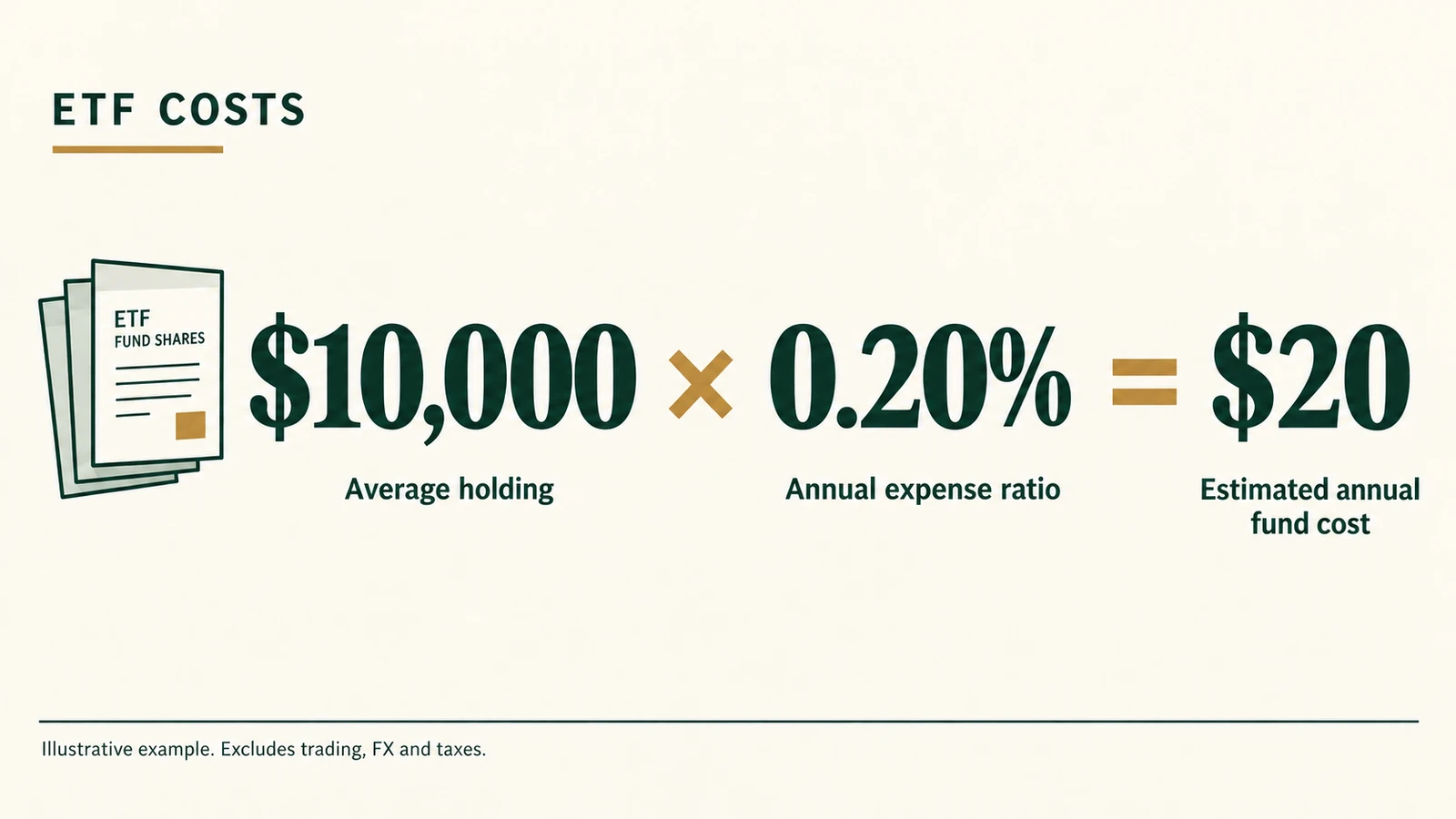
What does a 0.20% annual expense ratio cost?
Suppose an ETF has an annual expense ratio of 0.20% and your average holding value over the year is about US$10,000. A simplified estimate is about US$20 for the year. This is an educational example, not a fund quote or a promise that a broker will debit US$20 separately at year-end.
That US$20 estimates fund expenses only. Spreads, broker charges, currency conversion and applicable taxes may add to the total. If the returns shown in your account already reflect fund expenses, do not subtract them again.
Similar fees can hide very different funds
ETFs can hold different assets and use leverage or other strategies. Two funds with identical fees can have very different investment exposures and risks. The ETF label does not establish diversification or principal protection.
Read the investment objective and holdings alongside the fees so you know what you are comparing. The SEC and FINRA materials cited here use the US framework; funds and other exchange-traded products in other markets depend on local rules and their own documents.
References
Sources consulted: · Editorial policy
US investor education; product terms and legal protections vary by jurisdiction.
FINRA introduction to ETFs, exchange-traded products and costs in the US; individual terms depend on the prospectus.